As part of my senior honors project I am working with a small group of youth on performing the scripture texts as the proclamation. I chose to select Mark's Parables for the text and then narrowed down the parables to those that are specific about plant and tree language. I am working with three young ladies ranging in age from 13-16. In reading the text initially they were struck by the danger of the parables and how Jesus was speaking things that were unexpected to them.
They were struck and struggle deeply with the Parable of the Fig Tree (even to the point where Jesus curses a fig tree for not being in leaf). What in the heck is that suppose to mean? Would Jesus really do that or is it again a device of storytelling a parabolic structure that says something more about the kingdom of God.
In thinking more than just reading and responding but in the act of rehearsing and processing for performance the parables became more difficult and more striking than before. With each time they read the text they struggled with why this was said and how it seems counter intuitive to the message of the good news of the Gospel.
How can we really sit with these texts. So far what this best thing about working on this project is how performance gives a whole new element to scripture reading and study of scripture. It is one thing to preach a text, read scripture, or lead a Bible Study but in terms of performing a text we are pulled out of the one-dimensional world of reading from a page. The story comes alive in a whole new way. Interpretation of the text comes out of the performing and the spectator. The spectators are peering into a window of the text.
Mark was not written in a vacuum. The teachings, life, and witness of Jesus was told through oral tradition. The Book of Mark was a compilation of that witness that said something specific to a community and then got passed down. In ancient cultures, where oral tradition is paramount the text was a performance always. Not in the sense that the performer was about self gratification (in the modern lens, or fear of the word performance) but that the text had to be shared with a community.
How much do we lose in the scriptures when we merely read it alone, when we read it silently? How much is gained?
The Word of God was more fluid in in infancy. The oral tradition was allowing God's relationship with the people to be spoken, shared, and reflected upon. Maybe in our studying and performing of texts we can reclaim some of that early church vibrancy to the texts and followers of Christ.
Wednesday, September 30, 2015

Friday, September 18, 2015
Glory to God kids. Worship and Arts Program
The church that I work for has a myriad of talented individuals who dream beautiful things. One person decided that the kids of the church preschool-5th grade needed a time and a place to learn music and dance to share their gifts with the congregation. Last year she spearheaded this and even got high involvement from our preschool program (that is a school).
This year we dreamed up something more exciting. We are doing art workshops with the kids after a family style dinner with specific age groups and table parents. They get music all year long and then each 4 sessions (we only meet twice a month on Wednesday nights) there is a different element of the arts the kids are able to participate in and share with the congregation in Worship.
The first 4 sessions are exploring visual art. We are looking at the Parable of the Sower from Mark 4. The kids are exploring the text and styles of art. The younger kids are creating pieces that will be a 3D mural in the front of the sanctuary. The older kids are painting on banners that will hang. So in worship in November the congregation will be sitting in the parable and watching it unfold or more apropos GROWING throughout the worship service.
I can't wait to see how it will all unfold in the next few weeks. We had our first session last week and are gearing up for the second one next week. What I love it the mass amount of adult volunteers that are working with our children and giving them one on one time. A hands on experience and people that love on them is something that the world, the church, kids, and adults all need.
Sometimes it just takes one person to start something new and exciting, then it blossoms to something that can revitalize and reenergize the community.
This year we dreamed up something more exciting. We are doing art workshops with the kids after a family style dinner with specific age groups and table parents. They get music all year long and then each 4 sessions (we only meet twice a month on Wednesday nights) there is a different element of the arts the kids are able to participate in and share with the congregation in Worship.
The first 4 sessions are exploring visual art. We are looking at the Parable of the Sower from Mark 4. The kids are exploring the text and styles of art. The younger kids are creating pieces that will be a 3D mural in the front of the sanctuary. The older kids are painting on banners that will hang. So in worship in November the congregation will be sitting in the parable and watching it unfold or more apropos GROWING throughout the worship service.
I can't wait to see how it will all unfold in the next few weeks. We had our first session last week and are gearing up for the second one next week. What I love it the mass amount of adult volunteers that are working with our children and giving them one on one time. A hands on experience and people that love on them is something that the world, the church, kids, and adults all need.
Sometimes it just takes one person to start something new and exciting, then it blossoms to something that can revitalize and reenergize the community.
Monday, May 11, 2015
Creating Art Together
It was an honor to work with talented artists through the Worship and the Arts class.
Ellen Cavendish Phillips and Lisle Gwynn Garrity both used visual art with our class that was freeing and devotional.
Ellen read a Psalm once, asked us to bring in a material from home, and provided us with extra supplies and a canvas. She then turned on soothing music and let us go. I brought flowers that were from an Our House Gala. The yellows and whites of the flowers that I pulled apart and then glued onto the matte board flowed into something I created with purpose. I then began to paint in blues hearing water sounds. It then looked like the flower had burst from the blue. I added texture to the blues with sculpty clay and sand. I realized when I was finished that I turn it one way and it is water turn it around and it is sky.
This exercise was incredibly freeing and relaxing. There were many of us working side by side but I was entrenched in divine beauty that was between me and the Creator. I was not thinking, not judging, but just doing. Using my hands to create instead of my thoughts.
 Later in the week, Lisle lead the group in a painting exercise where we gathered around a canvas, heard the scripture 3 times and then were invited to paint a portion of the canvas. After a time we were told to stop, move 3 spaces and add to someone else's art, then again to another, and finally go back to our own or if it is finished find a blank space. The goal was simply to fill the whole canvas.
This brought about beautiful art and a communal devotion practice. There was one person that had in her mind that the exercise was not multiple people thinking about the passage and painting whatever but that one person would start something and many images would come about. Some of this happening organically. We painted what we felt and heard. I picked one phrase that stuck out, a river. I created a river and even wrote YHWH (name of God) in the water. I ended up moving to other river pieces and connected them to flow throughout like I heard in the Revelation passage we heard before beginning.
After finishing we talked through our experience and Lisle explained that this was a warm up exercise that she had with a group that created banners for the worship space (water and fire). They worked individually and then later read a scripture together and as a community talked through the ideas before creating a piece together that would be used for liturgical art.

Ellen Cavendish Phillips and Lisle Gwynn Garrity both used visual art with our class that was freeing and devotional.
Ellen read a Psalm once, asked us to bring in a material from home, and provided us with extra supplies and a canvas. She then turned on soothing music and let us go. I brought flowers that were from an Our House Gala. The yellows and whites of the flowers that I pulled apart and then glued onto the matte board flowed into something I created with purpose. I then began to paint in blues hearing water sounds. It then looked like the flower had burst from the blue. I added texture to the blues with sculpty clay and sand. I realized when I was finished that I turn it one way and it is water turn it around and it is sky.
This exercise was incredibly freeing and relaxing. There were many of us working side by side but I was entrenched in divine beauty that was between me and the Creator. I was not thinking, not judging, but just doing. Using my hands to create instead of my thoughts.

This brought about beautiful art and a communal devotion practice. There was one person that had in her mind that the exercise was not multiple people thinking about the passage and painting whatever but that one person would start something and many images would come about. Some of this happening organically. We painted what we felt and heard. I picked one phrase that stuck out, a river. I created a river and even wrote YHWH (name of God) in the water. I ended up moving to other river pieces and connected them to flow throughout like I heard in the Revelation passage we heard before beginning.
After finishing we talked through our experience and Lisle explained that this was a warm up exercise that she had with a group that created banners for the worship space (water and fire). They worked individually and then later read a scripture together and as a community talked through the ideas before creating a piece together that would be used for liturgical art.

Art can be used as a way for expression and response to scripture. Creating art gives another dimension that just observing can never do. Even when people don't consider themselves artists something beautiful can still be created, especially when there is a safe space and opportunity.
Art As...
Reflections on Ch. 4 of Robin Jensen The Substance of Things Seen
"Art, if it is to have any use in the church, must be vital and dynamic, relevant to the lives we now live. It can affect us and even change us by addressing our intellectual, emotional, ethical, and spiritual levels. Art can delight our eyes and inspire devotion. Art can deepen our understanding and enrich our worship. It can soothe, delight, and set us on fire." (100)
Art brings us to response. Sometimes the response is positive, spiritual, or inspire.
 Art has the power to shape us in a variety of ways. In class we talked about stained glass in the church. Not all people experienced stained glass in their church but those who have are shaped by its presence. For me, we had a series of stained glass and their were symbols of communion in each of the artworks. This enforced the importance of symbols in communion in my table theology. I grew up seeing the stories of scripture and the symbols of the church and when the sanctuary was remodeled my family sat in front of all stained glass so I have not gazed on them in years. Art shapes us in ways that we are not always aware of initially.
For many, the music is what gives people a sense of theology, for others their view of God or more specifically Jesus, comes from the interpretations of artists. The picture of Jesus on the right is close to the one that hangs in many Christian Education classrooms or buildings. This art says has engrained one image of Christ. It is an interpretation that Jesus looks like those who are in power or even that looks like those viewing it. The strong jaw line, perfect hair and kind eyes are all communicating something to the observer; consciously and subconsciously.

What if this was hanging on the wall in the Christian Education building instead. What does this art communicate to those who are observing?
Art communicates so much more than paint on a canvas. Art says more than words can even express. What art hangs on the walls, is used in worship, or anywhere else in church life says something about the community.
This means that sometimes that art can't be there to fill space or 'decorate' thanks to a generous donor. Leaders and communities need to discern what art is a part of their lives and what it communicates.
Sometimes we need to discern that certain art is not helpful for the community anymore and may need to be reconsidered.
Art As...Decoration?
When we consider art as only decoration than we fall into a few traps. One of which is diminishing to the artists. Art is not simply a space filler.
But decorative arts can be meaningful. As in the stained glass. It is an important part of the life of the church but for some is decorative more than reflective.
Architectural pieces have decorative elements but speak to the significance of the community. There is a lot of beauty in the 'decor' of a church.
Art As...Didactic?
Art has been important visual aides for centuries. Mosaics, stained glass, friezes, and other art have taught the masses about biblical themes and stories. Art was the Bible for the illiterate. Art, however is much more than a visual aide. Even in didactic, a teaching tool, art can open the church to deep conversations about theology and personal devotion. Art should open up the imagination not shut it down.
When art is reduced to just a visual aide, particularly for children alone, than we close off the use of art beyond decoration or a child's teaching aide because we have words and high theology.
Using forms of visual exegesis or viseo divinia can open up adult imaginations to look at art and experience how art shapes us and evokes a visceral response. Using art to teach is important and should be a part of Adult Christian Education as well a teaching moments in the worship setting. Art opens up a conversation and can give the congregation visual imagery to remember with the words that are spoken.
Art As...An Aide for Devotion?
The practice of viseo divina is another way for prayer and devotion to look at the beautiful or even grotesque that is in art for prayer and personal devotion as an aide to scripture reading. This can help the observer become an active participant in the scene. (94)
The longest tradition of art as an aide for devotion is praying with icons. Having a icon in front of you and using that as a visual aide or guide while in prayer where the viewer and the image may interact. The image is a window to the divine and invisible. (95)
Art As...Prophecy?
Prophetic art delivers a message. Says something pertinent about what is happening socially, dogmatically, and can even be an agent of change. (97)
Art can call forth more than one response. In class we viewed the piece to the right. There were multiple responses to this image. This art is prophetic because it says something difficult.
To one person it said that Jesus being God is more than male but is representative of all humanity.
To another seeing the female figure in this form reminded her of the pain of the crucifixion in a new way because the church has been numbed to seeing this image and not being offended or uncomfortable.
To yet another the idea of surrogacy and the many women who have taken on the burdens of others or even been oppressed.
The figure, the shape, even the nudity of the statue says so much that the conversation was all over the place and we had to stop in order to be aware of time.
As stated many times before ART SPEAKS when words are not enough.
"Art, if it is to have any use in the church, must be vital and dynamic, relevant to the lives we now live. It can affect us and even change us by addressing our intellectual, emotional, ethical, and spiritual levels. Art can delight our eyes and inspire devotion. Art can deepen our understanding and enrich our worship. It can soothe, delight, and set us on fire." (100)
Art brings us to response. Sometimes the response is positive, spiritual, or inspire.
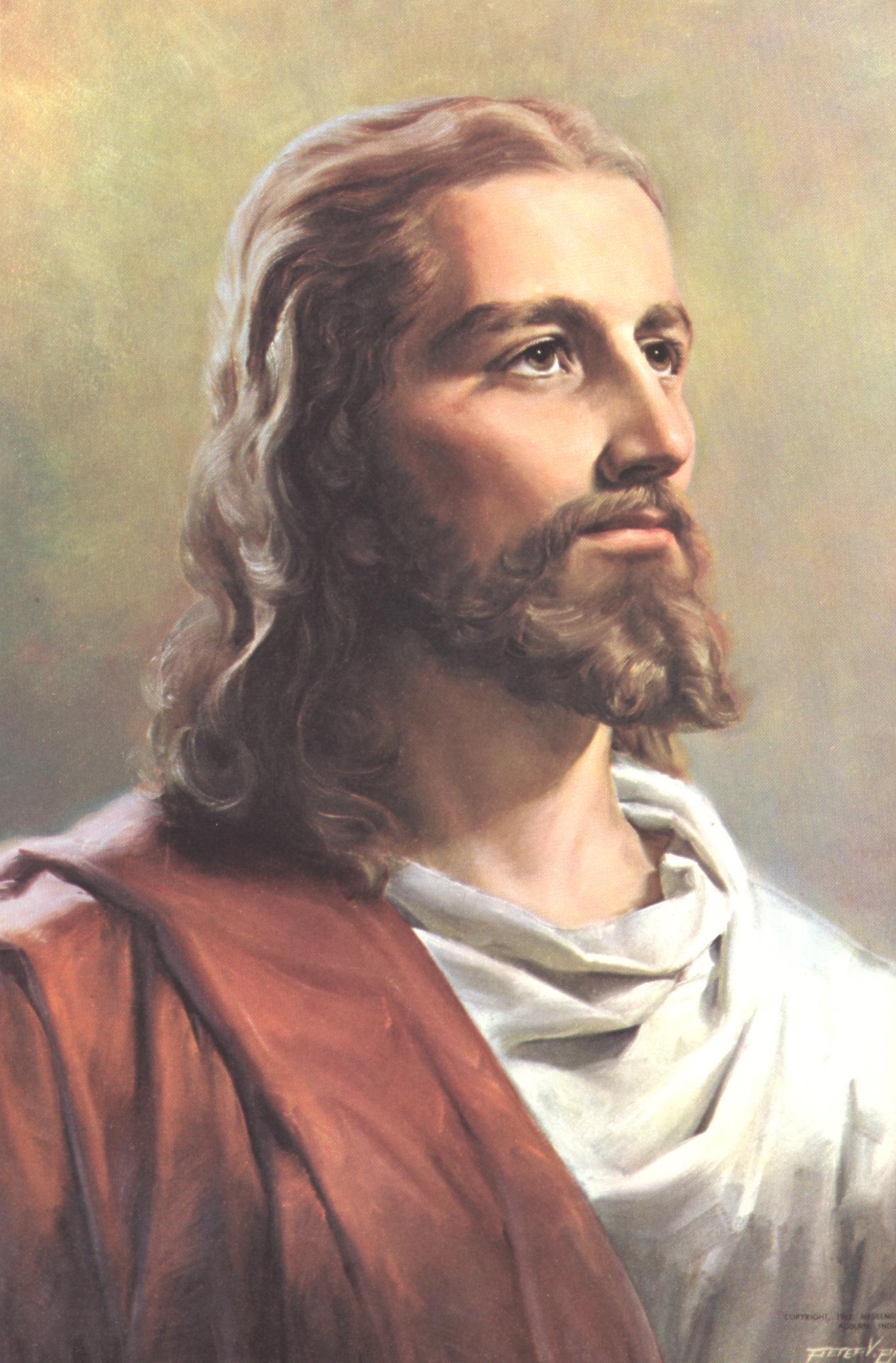 Art has the power to shape us in a variety of ways. In class we talked about stained glass in the church. Not all people experienced stained glass in their church but those who have are shaped by its presence. For me, we had a series of stained glass and their were symbols of communion in each of the artworks. This enforced the importance of symbols in communion in my table theology. I grew up seeing the stories of scripture and the symbols of the church and when the sanctuary was remodeled my family sat in front of all stained glass so I have not gazed on them in years. Art shapes us in ways that we are not always aware of initially.
For many, the music is what gives people a sense of theology, for others their view of God or more specifically Jesus, comes from the interpretations of artists. The picture of Jesus on the right is close to the one that hangs in many Christian Education classrooms or buildings. This art says has engrained one image of Christ. It is an interpretation that Jesus looks like those who are in power or even that looks like those viewing it. The strong jaw line, perfect hair and kind eyes are all communicating something to the observer; consciously and subconsciously.
What if this was hanging on the wall in the Christian Education building instead. What does this art communicate to those who are observing?
Art communicates so much more than paint on a canvas. Art says more than words can even express. What art hangs on the walls, is used in worship, or anywhere else in church life says something about the community.
This means that sometimes that art can't be there to fill space or 'decorate' thanks to a generous donor. Leaders and communities need to discern what art is a part of their lives and what it communicates.
Sometimes we need to discern that certain art is not helpful for the community anymore and may need to be reconsidered.
Art As...Decoration?
When we consider art as only decoration than we fall into a few traps. One of which is diminishing to the artists. Art is not simply a space filler.
But decorative arts can be meaningful. As in the stained glass. It is an important part of the life of the church but for some is decorative more than reflective.
Architectural pieces have decorative elements but speak to the significance of the community. There is a lot of beauty in the 'decor' of a church.
Art As...Didactic?
Art has been important visual aides for centuries. Mosaics, stained glass, friezes, and other art have taught the masses about biblical themes and stories. Art was the Bible for the illiterate. Art, however is much more than a visual aide. Even in didactic, a teaching tool, art can open the church to deep conversations about theology and personal devotion. Art should open up the imagination not shut it down.
When art is reduced to just a visual aide, particularly for children alone, than we close off the use of art beyond decoration or a child's teaching aide because we have words and high theology.
Using forms of visual exegesis or viseo divinia can open up adult imaginations to look at art and experience how art shapes us and evokes a visceral response. Using art to teach is important and should be a part of Adult Christian Education as well a teaching moments in the worship setting. Art opens up a conversation and can give the congregation visual imagery to remember with the words that are spoken.
Art As...An Aide for Devotion?
The practice of viseo divina is another way for prayer and devotion to look at the beautiful or even grotesque that is in art for prayer and personal devotion as an aide to scripture reading. This can help the observer become an active participant in the scene. (94)
The longest tradition of art as an aide for devotion is praying with icons. Having a icon in front of you and using that as a visual aide or guide while in prayer where the viewer and the image may interact. The image is a window to the divine and invisible. (95)
Art As...Prophecy?
 |
| Christa- Edwina Sandys |
Art can call forth more than one response. In class we viewed the piece to the right. There were multiple responses to this image. This art is prophetic because it says something difficult.
To one person it said that Jesus being God is more than male but is representative of all humanity.
To another seeing the female figure in this form reminded her of the pain of the crucifixion in a new way because the church has been numbed to seeing this image and not being offended or uncomfortable.
To yet another the idea of surrogacy and the many women who have taken on the burdens of others or even been oppressed.
The figure, the shape, even the nudity of the statue says so much that the conversation was all over the place and we had to stop in order to be aware of time.
As stated many times before ART SPEAKS when words are not enough.
Wednesday, May 6, 2015
Active Seeing
Reflections on Ch. 1 in Robin Jensen The Substance of Things Seen
"Art isn't just what we do, it is how we live, and who we are." (26)
It is not just about those who create art but also those who experience art. There are artists in this world that create because they have to express something. Artists who have technical experience may create because they are commissioned but no matter what there is always a process and a product.
Sometimes it is the process of creating that is as important, if not more important that the product. For iconographers, the process of writing an icon is vital. The tools, the supplies, and even the whole process is a prayer is a journey.
Liturgical Art can be a part of that holy experience. A prayerful practice.
The process however does not start with a painter but paint on a canvas but in how the painter notices and actively sees.
We are called to be attentive and sightful see-ers of the world. Noticing what is around us; colors, textures, shapes, forms, movement, and anything else. If we are attentive viewers of the world, of our communities, and of the 'translations' or depictions in art than we are looking with more than our heart but with our whole selves.
We cannot afford to be passive viewers. -We need to be attentive and insightful observers, but also attentive and critical observers at all time.
We should not take a utilitarian view of art. It is not for the purpose of being creative, experience. Worship is not to produce or create or make something happen---it is solely for the glory of God. -> Art is a practice, a way of being. The way we live and who we are. (17-18)
But just as we are active see-ers we have to remember not all people see as we do. Not all experience art in the same way. We may be formed and transformed by art but someone else may not be moved. Or the opposite can happen.
There are different understanding of what is beautiful.
Beauty however we apprehend it, draws us to itself. There is an attraction. An experience of beauty causes us to yearn for the transcendent. And beyond that moves us to a response.
If we are active in our seeing than we are drawn to it and will respond in potentially unexpected ways.
"Art isn't just what we do, it is how we live, and who we are." (26)
It is not just about those who create art but also those who experience art. There are artists in this world that create because they have to express something. Artists who have technical experience may create because they are commissioned but no matter what there is always a process and a product.
Sometimes it is the process of creating that is as important, if not more important that the product. For iconographers, the process of writing an icon is vital. The tools, the supplies, and even the whole process is a prayer is a journey.
Liturgical Art can be a part of that holy experience. A prayerful practice.
The process however does not start with a painter but paint on a canvas but in how the painter notices and actively sees.
We are called to be attentive and sightful see-ers of the world. Noticing what is around us; colors, textures, shapes, forms, movement, and anything else. If we are attentive viewers of the world, of our communities, and of the 'translations' or depictions in art than we are looking with more than our heart but with our whole selves.
We cannot afford to be passive viewers. -We need to be attentive and insightful observers, but also attentive and critical observers at all time.
We should not take a utilitarian view of art. It is not for the purpose of being creative, experience. Worship is not to produce or create or make something happen---it is solely for the glory of God. -> Art is a practice, a way of being. The way we live and who we are. (17-18)
But just as we are active see-ers we have to remember not all people see as we do. Not all experience art in the same way. We may be formed and transformed by art but someone else may not be moved. Or the opposite can happen.
Beauty however we apprehend it, draws us to itself. There is an attraction. An experience of beauty causes us to yearn for the transcendent. And beyond that moves us to a response.
If we are active in our seeing than we are drawn to it and will respond in potentially unexpected ways.
Tuesday, May 5, 2015
Words and Melodies: Christian Music and Art
Reflections on Inclusive Yet Discerning by Frank Burch Brown chs. 4-7
I don't think I have ever been to a church service where there was no music at all. It may have been reflective, loud, played by organ, or any number of things but there was always some kind of music as a part of the worship experience.
 Even when I was in the middle of the Wadi Rum desert with my traveling companions we sang hymns, praise songs, and spirituals as we felt led as a form of our worship while watching the sun set. I feel like there are few elements that are a vital part of the worshipping community: Prayer, Scripture Reading, and some sort of music. The order of worship, the way the word is proclaimed, all of that may be different in various ecumenical settings but there are these few things.
Music does something to us we when worship. Music speaks not just to the mind but to the heart and soul as well.
What we need to do is discern. Discern what the purpose of the art: music, technology, dance, or drama. Things that help us imagine beyond what we can experience in a static place like a sanctuary. Good discernment can aide in our prayer, proclamation, and other ways to think about how visuals and other art can speak through, into, and out of scripture and the worship experience.
We may choose a song for worship because of how it relates to the scripture text used but the mood of the music. We need to discern if we are exploiting the emotions of the those in worship or if we are enhancing the mood and emotions in order bring people to a place in worship.
Sometimes the melody has been the important driving part of the song. In the season of Lent in the PCUSA church there are many times that the hymnal or the selections are in minor chord but at the end of the season is the Resurrection where we turn directly toward the major chord with joyful and triumphant words. The melody is the movement of the service and the season. It brings us to a place of reflection.
In class this question was asked:
Could it not also be part of our calling to compose and sing music that is as varied as the people and communities who lift their hearts to God in song?
"Part of our calling is to sing the songs of peoples in communities not only in our own time but other times because we are expressing the unity of the body of Christ throughout time and location." -Kim Long
It is important to think about the long standing traditions of words, lyrics, or melodies that have now crossed time but what is beautiful is how artists and composers have looked at old words and created tunes that are accessible to the people. God has created people to express and how wonderful that the people of God are creating still; creating new and reclaiming the old.
God is working through artists, composers, and all humanity that join in the arts; whether it is by participating in or appreciating with the artist(s).
I don't think I have ever been to a church service where there was no music at all. It may have been reflective, loud, played by organ, or any number of things but there was always some kind of music as a part of the worship experience.

Music does something to us we when worship. Music speaks not just to the mind but to the heart and soul as well.
What we need to do is discern. Discern what the purpose of the art: music, technology, dance, or drama. Things that help us imagine beyond what we can experience in a static place like a sanctuary. Good discernment can aide in our prayer, proclamation, and other ways to think about how visuals and other art can speak through, into, and out of scripture and the worship experience.
We may choose a song for worship because of how it relates to the scripture text used but the mood of the music. We need to discern if we are exploiting the emotions of the those in worship or if we are enhancing the mood and emotions in order bring people to a place in worship.
Sometimes the melody has been the important driving part of the song. In the season of Lent in the PCUSA church there are many times that the hymnal or the selections are in minor chord but at the end of the season is the Resurrection where we turn directly toward the major chord with joyful and triumphant words. The melody is the movement of the service and the season. It brings us to a place of reflection.
In class this question was asked:
Could it not also be part of our calling to compose and sing music that is as varied as the people and communities who lift their hearts to God in song?
"Part of our calling is to sing the songs of peoples in communities not only in our own time but other times because we are expressing the unity of the body of Christ throughout time and location." -Kim Long
It is important to think about the long standing traditions of words, lyrics, or melodies that have now crossed time but what is beautiful is how artists and composers have looked at old words and created tunes that are accessible to the people. God has created people to express and how wonderful that the people of God are creating still; creating new and reclaiming the old.
God is working through artists, composers, and all humanity that join in the arts; whether it is by participating in or appreciating with the artist(s).
Thursday, April 30, 2015
Music in the church: Argument of the Ages
Insights and Questions from Inclusive Yet Discerning--Frank Burch Brown
Traditional or Contemporary? What does that even mean?
Traditional or Contemporary? What does that even mean?
For a musician and someone that knows and music history, specifically in the church, knows that music has outraged and sparked conversations throughout time with the addition of the music of the time.
What is deemed 'traditional' today was contemporary of the past. Music insights something in people and the style of music has spoken to people in ways that words have also effected others. No matter the style or genre there is something said about how music speaks to the soul of a person.
Nicholas Wolterstoff said "to enjoy beauty and thereby to enjoy God and God's creation, is both a duty and a delight.(-p16)
Are the arguments or 'worship wars' really worth it when most worshipping communities are no longer monocultural.
As we live in consumer culture we find a deep desire to please ourselves, please others, but at what expense. We take and we give what we have and might be ignoring the possibilities of artful worship.
Kim Long in class asked us to, "Reframe conversations and talk about what does it mean to love a brother and sister in Christ through music. I may not like the (insert song or genre here) but I love the sister or brother that worships through that expression."
We may not like certain music, or art but when we stifle certain forms or argue over style or genre we are neglecting those sitting around us that may be connecting with God in real and important ways.
In choosing music or forms of art in worship we must know our context, our congregation, and the appropriateness to the worship service.
"Discernment is as necessary in art as it is in life." (p.25)
Should we keep singing hymns that, while familiar--
or even comforting--
may be theologically unsound?
Is the music that is deemed 'contemporary' today be the 'traditional' of the future?
What instrument, style, or art form be the 'worship war' or tomorrow?
Music is the form of art in the church that has been a part of worship life. We know that the Psalms has musical form to it, and the writers of scripture talked about the songs, instruments, and dancing in response to God's loving mercy, grace, or even wrath. This long history of music in the life of communal worship has given the people their theology and their deep memories. Which is why when we push the boundaries of the community there will be push back. This is why our conversations need to be reframed from an us vs. them. It is not about either/or or this/vs/that but about the many ways the people of God express their love, devotion, questions, theology, praise, or lament. This may come from 'secular' music, praise music, organ and choir, chant, taize, or anything else.
Reframing the Conversation
1) Know your congregation. The stories, the people2) Be open to the gifts of the people in your congregation
3) Talk about the music that you are singing in healthy ways.
4) Be sensitive to those who are angry at thing that are new while still helping them know how the music or art could be important to the worship of someone else in the room
5) Listen to what the Spirit is calling. Do not change the worship style because it will attract. Be the congregation that God is calling you to be now. If there are people that desire something different then the conversation is already reframed.
Why does it have to be Art or Call
Why can't we understand that phrase as Art AND call. Many artists are called, many who are called to specific ordained ministry are artists. Why does one have to be mutually exclusive of the other.
When I started college I really wanted to pursue an acting career, but to keep my mom quiet I went ahead and chose a school that I could double major. So I double majored in Youth Ministry and Performing and Visual Arts with a Theatre Concentration at King College in Bristol, TN. So many people though it was a strange double major, I had to take more classes to keep up my schedule but it was important. Though I still didn't know what it meant to do art in my call. Then there was a drama ministry team on campus. But still my worlds clashed and collided. The youth ministry world was more about sports, mission trips, and education. When I got a call to do full time youth ministry I thought I had to set aside my art.
For my reasons I was miserable in my call, it became and job and part of that was not do what I was created to do: create. I was not able to create and as a Anna Owen's said in class, "a performer is an interpreter" so I also was able to interpret. I was able to find delight in many of the things I was doing but when I was acting again, I felt alive.
In seminary I have found ways to create, to interpret, and to live into my art in ways that enhance my call.
I have found the my art is my call and my call is my art.
The following quote has stuck with me since undergrad, when I first heard it after we opened a Buechner Institute and it continues to morph as I discern my call.
These are both meeting deep needs, I think for both the artist and for those experiencing the art.
These pieces speak in many different ways.
At the church, visitors and worshippers are looking at the art and seeing the importance of the place and the art brings expression to what the site means to them. The art brings those looking into the space.
In the West Bank the art is speaking to those who are oppressing and to the visitors as a plea and reminder of what is happening in that space. Bethlehem a place where people journey to see the birthplace of Christ is the place where men and women are oppressed by the Israeli government. The art on the walls is a way for them to express grief, pain, anger, and hope.
When I started college I really wanted to pursue an acting career, but to keep my mom quiet I went ahead and chose a school that I could double major. So I double majored in Youth Ministry and Performing and Visual Arts with a Theatre Concentration at King College in Bristol, TN. So many people though it was a strange double major, I had to take more classes to keep up my schedule but it was important. Though I still didn't know what it meant to do art in my call. Then there was a drama ministry team on campus. But still my worlds clashed and collided. The youth ministry world was more about sports, mission trips, and education. When I got a call to do full time youth ministry I thought I had to set aside my art.
For my reasons I was miserable in my call, it became and job and part of that was not do what I was created to do: create. I was not able to create and as a Anna Owen's said in class, "a performer is an interpreter" so I also was able to interpret. I was able to find delight in many of the things I was doing but when I was acting again, I felt alive.
In seminary I have found ways to create, to interpret, and to live into my art in ways that enhance my call.
I have found the my art is my call and my call is my art.
The following quote has stuck with me since undergrad, when I first heard it after we opened a Buechner Institute and it continues to morph as I discern my call.
"The place God calls you to is the place where your deep gladness and the world’s deep hunger meet." -Frederick Buechner
Place is not just a physical space but also a mental and spiritual space. My art is part of that. Performance art has been a new doorway. It has opened up possibilities for how to do Christian Education or lead worship.
So I know what my deep gladness is, what about the world's deep hunger
What is the world hungry for?
There is a hunger for art for ways to reflect or ways to express. Art can be therapeutic but that is not the only purpose of art. Art speaks in ways that words may not be able to speak.
In my travels to Israel/Palestine there is artwork all over the country. The ancient art that speaks to the graces and ways to seek to understand God and their place in the world with God. The other art that is being created today is speaking to a whole other purpose, reaching visitors and others to be reminded of the conflict, the art that is on the walls of the West Bank.
 |
| Church of the Holy Sepulchre. Old City of Jerusalem - the traditional site of where Jesus was crucified and Buried |
These pieces speak in many different ways.
At the church, visitors and worshippers are looking at the art and seeing the importance of the place and the art brings expression to what the site means to them. The art brings those looking into the space.
 |
| Wall in Bethlehem- West Bank |
Art is meeting the deep needs of the people.
The artists have been called to say something and we are called to respond to that art.
What are the responses to these two forms of art?
How can we use various forms of art in our worship? In our Sabbath?
How can we help others use art as a way to express our worship and praise of God? What will that look like?
Many people hear the word art, these might be the responses:
Art can be: joyous, exciting, life-enhancing, fun-packed, insight-provoking, exalting
Art can be: terrifying, frenetic, devastating, deadening, life-draining, mean spirited, illusion-shattering.
When art is mostly all of the first category, it means the go ahead is on. When art is mainly all of the second category, it’s time to go dancing
So in thinking about art and call and art and Sabbath we need to be free and allow ourselves---to dance.
Wednesday, April 29, 2015
Beautiful Things
This blog post is a reflection of the first 3 chapters of Deborah Sokolove's book Sanctifying Art.
Each person experiences art in different ways. We have our visceral reactions to art, good or bad. What if we looked again, kept looking putting our judgements aside to see the multiple ways in which art is experienced by others.
"There is nothing that does not participate in the beautiful" -St. Thomas Aquinas
I know not everyone can walk into a museum and stand in front of a painting for hours or even want to go to a museum at all. I went to a museum a few months ago and saw a Impressionist painting that was stunning. I would look at it far away, close up, at every angle, I saw the movement in the painting and it was breathtaking. I'm sure plenty of people walked by that same painting and said, "Oh that's nice" and moved on. Which is what I did to a lot of the art throughout the museum.
Each piece that is displayed or created participates in what is beautiful. In American 20th century churches many are looking for either what is practical with a great nod to aesthetics so to introduce art that is not aesthetically pleasing brings groans. But artists do not always think in the same way as others, "when artists speak of aesthetics, they are not usually speaking about beauty, but of relationship (harmonies or otherwise) among the various elements of artwork, and how those relationships express ideas or emotions." (p. 45)
In the church I am currently working we have a few artists that have created pieces for our space. One artist is a sculptor and he created a piece that sits in our fellowship hall. Below is a picture with one of our parishioners. Many people walk by it and tell others they don't understand what it is saying. Many think it is ugly but they love the person that created it. After reading Sokolove's chapter on beauty and aesthetics I was thinking about how I need to keep thinking about this piece and see the new beauty of the art.

We cannot dismiss art because it doesn't look like our idea of what art is, otherwise we will miss out on something incredible. Something new is happening in art and with God as we look at art in our worship spaces or anytime we gather. There are times when art offends, and sometimes that is its purpose. But sometimes art is speaking beyond our preconceived notions of what art was, is, could be, or should be.
I was struck by the story that was mentioned about Robert Graham's Our Lady of the Angels. That someone saw this statue and called it ugly. When I looked at it I saw a beautiful depiction of Mary that is indistinct of a particular ethnicity or gender bias. The way the statue was situated where what was below and above evoked so many meanings is powerful. When we close ourselves off to beauty that is beyond aesthetics then we close ourselves off to the possibilities that art, in any form can bring us.
I want to close this with two thoughts.
One is from St. Augustine: "Do Beautiful things delight because they are beautiful or are they beautiful because they delight?"
And the other is from a contemporary worship band Beautiful Things by Gungor. With this quote about God. "You make beautiful things
You make beautiful things out of the dust
You make beautiful things
You make beautiful things out of us"
Whether it is art, nature, or even the people you encounter. God sees all things as beautiful, and thanks be to God for that.
I want to close this with two thoughts.
One is from St. Augustine: "Do Beautiful things delight because they are beautiful or are they beautiful because they delight?"
And the other is from a contemporary worship band Beautiful Things by Gungor. With this quote about God. "You make beautiful things
You make beautiful things out of the dust
You make beautiful things
You make beautiful things out of us"
Whether it is art, nature, or even the people you encounter. God sees all things as beautiful, and thanks be to God for that.
Monday, April 27, 2015
Worshipping Body as Ensemble
Reflections on Clayton Schmit Too Deep for Words: A Theology of Liturgical Expression, chapter By Faith and Not by Sight
What a wonderful world we live in to be able to worship God in ways not only speak to God but speaks our language and enlivens us in ways that are unexplainable. I have been a part of worship services that several gallons of coffee haven't helped and I have been in worship services that gave me energy in ways coffee never will. This isn't just a contemporary vs. traditional issue. It is more than that. The first question that I always ask myself in worship is, Where is God?
Many people struggle with certain worship spaces, venues, or expressions because of one word: Performance.
Does this feel like entertainment? Worship isn't about us, it's about the audience of one--->God!
As someone who has found theatre to be one of the most life giving expressions, I really struggled to hear people exclaim the importance of high reverence or elevated vernacular. I hated hearing scripture read in a tone of voice that made it sound like something that was supposed to be done but not the most important part of service.
So why is the word performance a struggle? Is is possibly because people want so desperately to separate church life from other forms of entertainment that is also performance. Entertainment such as concerts, movies, and even live theatre are to keep us engaged and the people performing are praised for their work. Churches simply do not want to praise the artists but to only praise God. There is a fear of performance in worship because of the possibility of the performer being the focus instead of God.
What can we learn though from performance? Schmit quotes Richard Ward in his definitions of performance from the French par+fournir which means 'carry through to completion" and as performance being a "form coming through" (p. 31)
I have heard a someone say a worship service is a rehearsal and the performance is what we do in our daily lives. We rehearse together as a community how to do kingdom living in the world. In many ways this works with the definition and in some ways it's counteracts the above statement. Because we are practicing kingdom living in worship, in community, as witnesses to the world but it is never completed. Schmit offers some insight into this from a quote by David Power in saying, "The church celebrates the presence of the Lord in these symbols [liturgy], while at the same time recognizing the absence that will endure until the eschaton." [the end of time, return of Christ] (p. 34) We are practicing to live like Christ but we not achieve that because one, we are not Christ, and two, Christ has promised his return.
Is worship performance?
In many ways, yes. Thinking this way may be dangerous but it can be extremely powerful as well. Kierkagaard saw simlarites between worship and drama and said that the congregation and leadership were playing to God as the audience. But Schmit says something that is super powerful. "God is also active and performing in worship..in a sense there is no audience in worship." (p. 32)
What if we thought of the body of Christ, the worshipping body as an Ensemble. The group, including God, all come together to play, figure out, work out, sing, dance, move, mess up, create, destroy, try over and over again. Find their voice, lose it, create bonds, and work together for a common purpose. As an ensemble, all players are integral parts. We pray for God's presence and hold on to scriptures that tell us, "For where two or three are gathered in my name, I am there among them.” (Matthew 18:20) Leaders of the church, whether it be the pastor or musicians are there to speak of the promises of God but it is the work of the Holy Spirit and the presence of God that makes it holy and changes substances such as the water for baptism, or the bread and wine for communion into more than merely visual symbols. We are participants with God, enacting the greater story alongside.
Worship is performance is not performance in that, the goal is the entertain the potential audience, which is the congregation. Many people feel certain worship styles do that for them and they struggle. But I have experienced the same type of expression of praise, in the form of clapping after a piece, following a particularly complicated organ piece. And the comment made to me by the minister is that she wished that she got that kind of response following her preaching. I remember my immediate response being I hope one day to get that kind of response from a congregation following what I had to say. I think back on that conversation and wonder was it that I got out of the way and creating a space for Presbyterians to actually clap after I spoke or that I wanted a big pat on the back for a job well done. What was the preacher's subtext when wondering about the applause following the organist piece of music?
Can performance be worshipful?
Yes! I wholeheartedly believe that no matter what we do, God works with it and makes it beautiful. I think about this conversation and question a lot as someone who is a performer. I love being creative in worship and using my gifts in theatre to glorify God. I do know that there are times when I have to step back and ask myself is this "the Kristy" show or is this helping other come to know God in a rich, authentic way. Creativity for the sake of creativity, while beautiful and fun runs a big risk of having worship no longer be about God but about the performer(s). But can it still speak to people and glorify God.
God has created varieties of people and guided them to places in their lives to enrich their own worship and the worship of those with which they share community and identity. The words we hear in proclamation and the things we see in visual art or hear in music are words that 'God gives us and are a sign that God is with us, actively giving us the message of grace or reproval.' (p. 38) God is a hidden presence.
In theatre when people enter into a performance they are asked to suspend their disbelief. We know that the actors aren't actually the characters they are playing, we know that we are not in 1789 during the French Revolution when we see Les Misérables performed but we suspend our disbelief as we watch and we are there with the performers, in the story, in the moment.
God is there with us, when we read the scriptures we are not in 1st century Palestine, walking with Jesus and the disciples but the words are real and can bring listeners in to feeling like they have heard it for the first time and that is powerful.
In thinking about theatre, the group practices and studies their roles for a long period of time, familiarizes themselves with the words so much that if something changes in the midst of the play (such is live theatre) than they can adapt and keep moving.
So what if we are worship leaders and active participants in worship put some of that effort into our gathering. How much more would we be familiar with the Word of God? How much more would we be familiar with the people with whom we tell the story? How enriching to rehearse a text. I can't imagine how an oral tradition could not have had priest and rabbis as incredible engaging storytellers. Since we have the texts written down many times leaders are so wrapped up in the preparation of the sermon or in what is happening around them that they the end up just reading the text and not telling the story.
Acting is not a bad thing
The great Stanislavski, talked about the 'Magic If,' acting is asking a lot of "what if" questions. Schmit highlights Jana Childers comment that the word if, "gives us permission to be something other than what we are." (p.36) In thinking about us being imitators of Christ, and thinking of Christ in our lives and how we enact our faith.
When we read scripture, sing, dance, pray, or any other form of expression we are inviting the 'what if' into our lives. When we attempt to live out our faith in the world we are constantly asking ourselves the 'what if.' When we try to love one another and love God we are acting out our role as worshipful beings.
Can the idea of saying we are acting be dangerous---yes. But that is because the idea that we are putting on a face or facade is what acting means to someone. But plays are supposed to be imitations of real life. They may be abstractions or even distortions. Performance can achieve something in worship that can be extremely powerful for the whole worshipping body.
What a wonderful world we live in to be able to worship God in ways not only speak to God but speaks our language and enlivens us in ways that are unexplainable. I have been a part of worship services that several gallons of coffee haven't helped and I have been in worship services that gave me energy in ways coffee never will. This isn't just a contemporary vs. traditional issue. It is more than that. The first question that I always ask myself in worship is, Where is God?
Many people struggle with certain worship spaces, venues, or expressions because of one word: Performance.
Does this feel like entertainment? Worship isn't about us, it's about the audience of one--->God!
As someone who has found theatre to be one of the most life giving expressions, I really struggled to hear people exclaim the importance of high reverence or elevated vernacular. I hated hearing scripture read in a tone of voice that made it sound like something that was supposed to be done but not the most important part of service.
So why is the word performance a struggle? Is is possibly because people want so desperately to separate church life from other forms of entertainment that is also performance. Entertainment such as concerts, movies, and even live theatre are to keep us engaged and the people performing are praised for their work. Churches simply do not want to praise the artists but to only praise God. There is a fear of performance in worship because of the possibility of the performer being the focus instead of God.
What can we learn though from performance? Schmit quotes Richard Ward in his definitions of performance from the French par+fournir which means 'carry through to completion" and as performance being a "form coming through" (p. 31)
I have heard a someone say a worship service is a rehearsal and the performance is what we do in our daily lives. We rehearse together as a community how to do kingdom living in the world. In many ways this works with the definition and in some ways it's counteracts the above statement. Because we are practicing kingdom living in worship, in community, as witnesses to the world but it is never completed. Schmit offers some insight into this from a quote by David Power in saying, "The church celebrates the presence of the Lord in these symbols [liturgy], while at the same time recognizing the absence that will endure until the eschaton." [the end of time, return of Christ] (p. 34) We are practicing to live like Christ but we not achieve that because one, we are not Christ, and two, Christ has promised his return.
Is worship performance?
In many ways, yes. Thinking this way may be dangerous but it can be extremely powerful as well. Kierkagaard saw simlarites between worship and drama and said that the congregation and leadership were playing to God as the audience. But Schmit says something that is super powerful. "God is also active and performing in worship..in a sense there is no audience in worship." (p. 32)
What if we thought of the body of Christ, the worshipping body as an Ensemble. The group, including God, all come together to play, figure out, work out, sing, dance, move, mess up, create, destroy, try over and over again. Find their voice, lose it, create bonds, and work together for a common purpose. As an ensemble, all players are integral parts. We pray for God's presence and hold on to scriptures that tell us, "For where two or three are gathered in my name, I am there among them.” (Matthew 18:20) Leaders of the church, whether it be the pastor or musicians are there to speak of the promises of God but it is the work of the Holy Spirit and the presence of God that makes it holy and changes substances such as the water for baptism, or the bread and wine for communion into more than merely visual symbols. We are participants with God, enacting the greater story alongside.
Worship is performance is not performance in that, the goal is the entertain the potential audience, which is the congregation. Many people feel certain worship styles do that for them and they struggle. But I have experienced the same type of expression of praise, in the form of clapping after a piece, following a particularly complicated organ piece. And the comment made to me by the minister is that she wished that she got that kind of response following her preaching. I remember my immediate response being I hope one day to get that kind of response from a congregation following what I had to say. I think back on that conversation and wonder was it that I got out of the way and creating a space for Presbyterians to actually clap after I spoke or that I wanted a big pat on the back for a job well done. What was the preacher's subtext when wondering about the applause following the organist piece of music?
Can performance be worshipful?
Yes! I wholeheartedly believe that no matter what we do, God works with it and makes it beautiful. I think about this conversation and question a lot as someone who is a performer. I love being creative in worship and using my gifts in theatre to glorify God. I do know that there are times when I have to step back and ask myself is this "the Kristy" show or is this helping other come to know God in a rich, authentic way. Creativity for the sake of creativity, while beautiful and fun runs a big risk of having worship no longer be about God but about the performer(s). But can it still speak to people and glorify God.
God has created varieties of people and guided them to places in their lives to enrich their own worship and the worship of those with which they share community and identity. The words we hear in proclamation and the things we see in visual art or hear in music are words that 'God gives us and are a sign that God is with us, actively giving us the message of grace or reproval.' (p. 38) God is a hidden presence.
In theatre when people enter into a performance they are asked to suspend their disbelief. We know that the actors aren't actually the characters they are playing, we know that we are not in 1789 during the French Revolution when we see Les Misérables performed but we suspend our disbelief as we watch and we are there with the performers, in the story, in the moment.
God is there with us, when we read the scriptures we are not in 1st century Palestine, walking with Jesus and the disciples but the words are real and can bring listeners in to feeling like they have heard it for the first time and that is powerful.
In thinking about theatre, the group practices and studies their roles for a long period of time, familiarizes themselves with the words so much that if something changes in the midst of the play (such is live theatre) than they can adapt and keep moving.
So what if we are worship leaders and active participants in worship put some of that effort into our gathering. How much more would we be familiar with the Word of God? How much more would we be familiar with the people with whom we tell the story? How enriching to rehearse a text. I can't imagine how an oral tradition could not have had priest and rabbis as incredible engaging storytellers. Since we have the texts written down many times leaders are so wrapped up in the preparation of the sermon or in what is happening around them that they the end up just reading the text and not telling the story.
Acting is not a bad thing
The great Stanislavski, talked about the 'Magic If,' acting is asking a lot of "what if" questions. Schmit highlights Jana Childers comment that the word if, "gives us permission to be something other than what we are." (p.36) In thinking about us being imitators of Christ, and thinking of Christ in our lives and how we enact our faith.
When we read scripture, sing, dance, pray, or any other form of expression we are inviting the 'what if' into our lives. When we attempt to live out our faith in the world we are constantly asking ourselves the 'what if.' When we try to love one another and love God we are acting out our role as worshipful beings.
Can the idea of saying we are acting be dangerous---yes. But that is because the idea that we are putting on a face or facade is what acting means to someone. But plays are supposed to be imitations of real life. They may be abstractions or even distortions. Performance can achieve something in worship that can be extremely powerful for the whole worshipping body.
Subscribe to:
Posts (Atom)