Monday, May 11, 2015

Creating Art Together

It was an honor to work with talented artists through the Worship and the Arts class.

Ellen Cavendish Phillips and Lisle Gwynn Garrity both used visual art with our class that was freeing and devotional.

Ellen read a Psalm once, asked us to bring in a material from home, and provided us with extra supplies and a canvas. She then turned on soothing music and let us go. I brought flowers that were from an Our House Gala. The yellows and whites of the flowers that I pulled apart and then glued onto the matte board flowed into something I created with purpose. I then began to paint in blues hearing water sounds. It then looked like the flower had burst from the blue. I added texture to the blues with sculpty clay and sand. I realized when I was finished that I turn it one way and it is water turn it around and it is sky.

This exercise was incredibly freeing and relaxing. There were many of us working side by side but I was entrenched in divine beauty that was between me and the Creator. I was not thinking, not judging, but just doing. Using my hands to create instead of my thoughts.

Later in the week, Lisle lead the group in a painting exercise where we gathered around a canvas, heard the scripture 3 times and then were invited to paint a portion of the canvas. After a time we were told to stop, move 3 spaces and add to someone else's art, then again to another, and finally go back to our own or if it is finished find a blank space. The goal was simply to fill the whole canvas.

This brought about beautiful art and a communal devotion practice. There was one person that had in her mind that the exercise was not multiple people thinking about the passage and painting whatever but that one person would start something and many images would come about. Some of this happening organically. We painted what we felt and heard. I picked one phrase that stuck out, a river. I created a river and even wrote YHWH (name of God) in the water. I ended up moving to other river pieces and connected them to flow throughout like I heard in the Revelation passage we heard before beginning.

After finishing we talked through our experience and Lisle explained that this was a warm up exercise that she had with a group that created banners for the worship space (water and fire). They worked individually and then later read a scripture together and as a community talked through the ideas before creating a piece together that would be used for liturgical art.

Art can be used as a way for expression and response to scripture. Creating art gives another dimension that just observing can never do. Even when people don't consider themselves artists something beautiful can still be created, especially when there is a safe space and opportunity. 

Art As...

Reflections on Ch. 4 of Robin Jensen The Substance of Things Seen 

"Art, if it is to have any use in the church, must be vital and dynamic, relevant to the lives we now live. It can affect us and even change us by addressing our intellectual, emotional, ethical, and spiritual levels. Art can delight our eyes and inspire devotion. Art can deepen our understanding and enrich our worship. It can soothe, delight, and set us on fire." (100)

Art brings us to response. Sometimes the response is positive, spiritual, or inspire.

Art has the power to shape us in a variety of ways. In class we talked about stained glass in the church. Not all people experienced stained glass in their church but those who have are shaped by its presence. For me, we had a series of stained glass and their were symbols of communion in each of the artworks. This enforced the importance of symbols in communion in my table theology. I grew up seeing the stories of scripture and the symbols of the church and when the sanctuary was remodeled my family sat in front of all stained glass so I have not gazed on them in years. Art shapes us in ways that we are not always aware of initially.

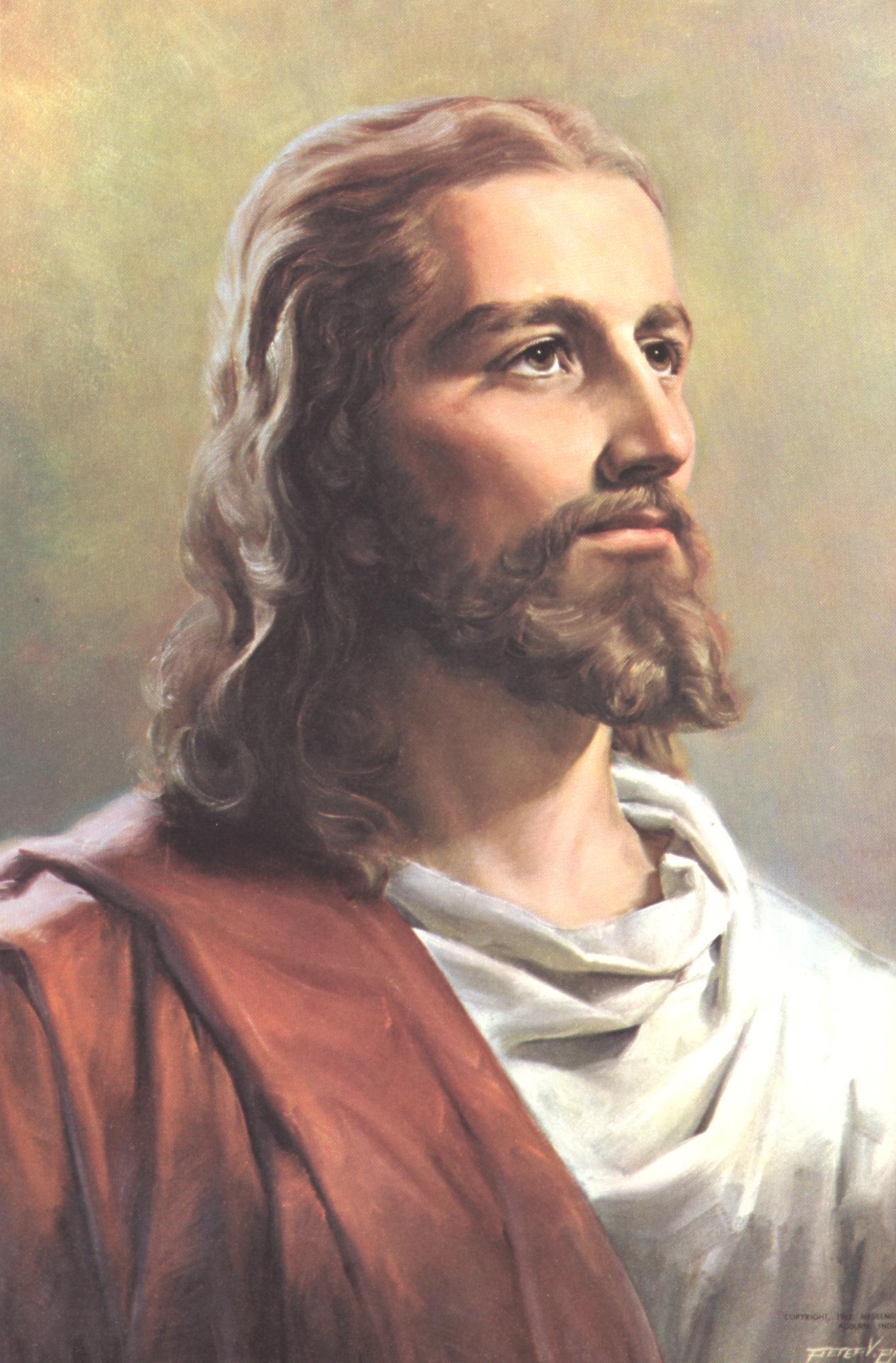
For many, the music is what gives people a sense of theology, for others their view of God or more specifically Jesus, comes from the interpretations of artists. The picture of Jesus on the right is close to the one that hangs in many Christian Education classrooms or buildings. This art says has engrained one image of Christ. It is an interpretation that Jesus looks like those who are in power or even that looks like those viewing it. The strong jaw line, perfect hair and kind eyes are all communicating something to the observer; consciously and subconsciously.

What if this was hanging on the wall in the Christian Education building instead. What does this art communicate to those who are observing?


Art communicates so much more than paint on a canvas. Art says more than words can even express. What art hangs on the walls, is used in worship, or anywhere else in church life says something about the community.

This means that sometimes that art can't be there to fill space or 'decorate' thanks to a generous donor. Leaders and communities need to discern what art is a part of their lives and what it communicates.

Sometimes we need to discern that certain art is not helpful for the community anymore and may need to be reconsidered.

Art As...Decoration?
    When we consider art as only decoration than we fall into a few traps. One of which is diminishing to the artists. Art is not simply a space filler.
     But decorative arts can be meaningful. As in the stained glass. It is an important part of the life of the church but for some is decorative more than reflective.
      Architectural pieces have decorative elements but speak to the significance of the community. There is a lot of beauty in the 'decor' of a church.

Art As...Didactic?
    Art has been important visual aides for centuries. Mosaics, stained glass, friezes, and other art have taught the masses about biblical themes and stories. Art was the Bible for the illiterate. Art, however is much more than a visual aide. Even in didactic, a teaching tool, art can open the church to deep conversations about theology and personal devotion. Art should open up the imagination not shut it down.

When art is reduced to just a visual aide, particularly for children alone, than we close off the use of art beyond decoration or a child's teaching aide because we have words and high theology.

Using forms of visual exegesis or viseo divinia can open up adult imaginations to look at art and experience how art shapes us and evokes a visceral response. Using art to teach is important and should be a part of Adult Christian Education as well a teaching moments in the worship setting. Art opens up a conversation and can give the congregation visual imagery to remember with the words that are spoken.

Art As...An Aide for Devotion?
The practice of viseo divina is another way for prayer and devotion to look at the beautiful or even grotesque that is in art for prayer and personal devotion as an aide to scripture reading. This can help the observer become an active participant in the scene. (94)

The longest tradition of art as an aide for devotion is praying with icons. Having a icon in front of you and using that as a visual aide or guide while in prayer where the viewer and the image may interact. The image is a window to the divine and invisible. (95)

Art As...Prophecy? 
Christa- Edwina Sandys
 Prophetic art delivers a message. Says something pertinent about what is happening socially, dogmatically, and can even be an agent of change. (97)

Art can call forth more than one response. In class we viewed the piece to the right. There were multiple responses to this image. This art is prophetic because it says something difficult.

To one person it said that Jesus being God is more than male but is representative of all humanity.

To another seeing the female figure in this form reminded her of the pain of the crucifixion in a new way because the church has been numbed to seeing this image and not being offended or uncomfortable.

To yet another the idea of surrogacy and the many women who have taken on the burdens of others or even been oppressed.

The figure, the shape, even the nudity of the statue says so much that the conversation was all over the place and we had to stop in order to be aware of time.

As stated many times before ART SPEAKS when words are not enough.

Wednesday, May 6, 2015

Active Seeing

Reflections on Ch. 1 in Robin Jensen The Substance of Things Seen 

"Art isn't just what we do, it is how we live, and who we are." (26)

It is not just about those who create art but also those who experience art. There are artists in this world that create because they have to express something. Artists who have technical experience may create because they are commissioned but no matter what there is always a process and a product.

Sometimes it is the process of creating that is as important, if not more important that the product. For iconographers, the process of writing an icon is vital. The tools, the supplies, and even the whole process is a prayer is a journey.

Liturgical Art can be a part of that holy experience. A prayerful practice.

The process however does not start with a painter but paint on a canvas but in how the painter notices and actively sees.

We are called to be attentive and sightful see-ers of the world. Noticing what is around us; colors, textures, shapes, forms, movement, and anything else. If we are attentive viewers of the world, of our communities, and of the 'translations' or depictions in art than we are looking with more than our heart but with our whole selves.

We cannot afford to be passive viewers. -We need to be attentive and insightful observers, but also attentive and critical observers at all time.

We should not take a utilitarian view of art. It is not for the purpose of being creative, experience. Worship is not to produce or create or make something happen---it is solely for the glory of God. -> Art is a practice, a way of being. The way we live and who we are. (17-18)

But just as we are active see-ers we have to remember not all people see as we do. Not all experience art in the same way. We may be formed and transformed by art but someone else may not be moved. Or the opposite can happen.

There are different understanding of what is beautiful.


Beauty however we apprehend it, draws us to itself. There is an attraction. An experience of beauty causes us to yearn for the transcendent. And beyond that moves us to a response.

If we are active in our seeing than we are drawn to it and will respond in potentially unexpected ways.


Tuesday, May 5, 2015

Words and Melodies: Christian Music and Art

Reflections on Inclusive Yet Discerning by Frank Burch Brown chs. 4-7

I don't think I have ever been to a church service where there was no music at all. It may have been reflective, loud, played by organ, or any number of things but there was always some kind of music as a part of the worship experience.

Even when I was in the middle of the Wadi Rum desert with my traveling companions we sang hymns, praise songs, and spirituals as we felt led as a form of our worship while watching the sun set. I feel like there are few elements that are a vital part of the worshipping community: Prayer, Scripture Reading, and some sort of music. The order of worship, the way the word is proclaimed, all of that may be different in various ecumenical settings but there are these few things.

Music does something to us we when worship. Music speaks not just to the mind but to the heart and soul as well.

What we need to do is discern. Discern what the purpose of the art: music, technology, dance, or drama. Things that help us imagine beyond what we can experience in a static place like a sanctuary. Good discernment can aide in our prayer, proclamation, and other ways to think about how visuals and other art can speak through, into, and out of scripture and the worship experience.

We may choose a song for worship because of how it relates to the scripture text used but the mood of the music. We need to discern if we are exploiting the emotions of the those in worship or if we are enhancing the mood and emotions in order bring people to a place in worship.

Sometimes the melody has been the important driving part of the song. In the season of Lent in the PCUSA church there are many times that the hymnal or the selections are in minor chord but at the end of the season is the Resurrection where we turn directly toward the major chord with joyful and triumphant words. The melody is the movement of the service and the season. It brings us to a place of reflection.


In class this question was asked:
Could it not also be part of our calling to compose and sing music that is as varied as the people and communities who lift their hearts to God in song?
"Part of our calling is to sing the songs of peoples in communities not only in our own time but other times because we are expressing the unity of the body of Christ throughout time and location." -Kim Long

It is important to think about the long standing traditions of words, lyrics, or melodies that have now crossed time but what is beautiful is how artists and composers have looked at old words and created tunes that are accessible to the people. God has created people to express and how wonderful that the people of God are creating still; creating new and reclaiming the old.

God is working through artists, composers, and all humanity that join in the arts; whether it is by participating in or appreciating with the artist(s).